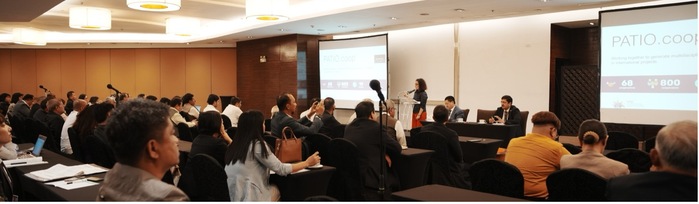
The 11th Asia Pacific Cooperative Forum on the theme ‘Cooperatives: Our Common Agenda’ was successfully held on 8th November 2023 in Manila, the Philippines. The response to the Forum was enthusiastic with the participation of more than 600 attendees representing 22 countries. The Forum hosted 16 speakers from 11 countries and witnessed a thought-provoking plenary, three informative breakout sessions, and the adoption of the Manila Declaration. The discussions during the Forum delved into crucial topics such as cooperative identity, driving the climate agenda forward through cross-sector collaboration, empowering cooperatives by promoting diversity and inclusion and ensuring cooperatives’ relevance by embracing disruptive technologies for sustainable growth.
It was exciting to hear Mr. Andrew Allimadi, Coordinator on Cooperative issues at the United Nations Department on Economic and Social Affairs speak about the resolution on cooperatives in social development calling for the proclamation of 2025 as the International Year of Cooperatives. The resolution - presented by the Government of Mongolia – was adopted on 3rd November during the 47th plenary meeting of the United Nations General Assembly (recording in this link – to watch the adoption of this resolution from minutes 25 to 35).

The Forum reaffirmed the Statement on Cooperative Identity and its promotion in theory and practice at all levels of cooperative functioning. It recognized the need for cooperatives to drive the climate agenda forward by advancing sustainability through cross-sector collaboration, and reimagining how we produce, consume, and dispose of resources. It also recognised diversity and inclusion by appreciating the inherent ability of cooperative enterprises to mainstream women, youth and marginalised sections of society, thus creating equal opportunity for all. It also recognized the urgency of technology adoption to increase participation, service and competitiveness of cooperative enterprises in realizing their inherent sustainable future; recognizing the shift towards digitalization and the requirements for digital channels for cooperative shared services, and improved digital tools and technology for enhanced productivity, risk management with cybersecurity system to protect members’ identity and data. The Forum highlighted the relevance of Sustainable Development Goals (SDGs) the importance of positioning cooperatives in the Global Development Agenda, and the creation of enabling legal, policy and regulatory climate to realise the complete potential of people-based economic enterprises in the Asia Pacific region.

The Manila Declaration, adopted in the Forum, calls on cooperatives to initiate activities at the national and local levels to preserve and promote the cooperative identity towards reaching our common agenda. It urges national cooperative movements to call on their Governments to update cooperative laws and policies in conformity with the universally accepted statement of the cooperative identity. It calls upon national Governments, inter-governmental agencies and other stakeholders to recognize cooperatives as representatives of a significant section of the population and to work in cooperation with the national, regional and global cooperative movements in tackling climate change and pursuing the achievement of the SDGs.
The Declaration urges all stakeholders to initiate activities at the national and local level to pursue and achieve inclusive and democratic sustainable development by increasing member participation, and with a greater focus on women, youth and indigenous and marginalized people while addressing their socio-economic, cultural and environmental needs and aspirations. They need to harness the power of cooperation among cooperatives and expertise in the Asia-Pacific region and around the world, to ensure access to technology for all sizes of cooperatives, showcase the use of technology to expand the reach and diverse community, and the practice of cooperative values and principles in the digital economy. It stresses the need to assess and measure the contribution of cooperatives while augmenting cooperative research and using technological tools to gain knowledge, efficient data, and management capacity, to enable the dissemination of information on cooperatives as well as sustain sovereign support from national Governments and other stakeholders.