
The history of the modern consumer cooperative movement in urban areas of Korea started in the 1980s when the destruction of agriculture due to chemicals and pesticide took a toll on both farmers and consumers. As environmental problems such as pesticides, food additives, environmental hormones, and antibiotics became more serious, consumers stepped up and set up coops to trade directly with organic farms. Until now, the unique characteristics - the solidarity between farmers and consumers and the pursuit of eco-friendly food - have existed in the movement of consumer cooperatives.
iCOOP was established in 1997 as the federation of six small coops that were on the verge of bankruptcy. As of December 2020, it has grown to be 101 members cooperative with 300,000 members, 243 stores, and two industrial cluster complexes called Natural Dream Park.
Since 1997, iCOOP has pursued “ethical consumerism” through solidarity and democratic participation from members, hoping to achieve food security, protect agriculture and the environment, and respect humans and labour. With the declaration of Ethical Consumerism in 2008, iCOOP started fairtrade with farmers in foreign countries, contributing to their economic independence and eco-friendly farming. Sales grew from KRW 3.1 billion in 2012 to KRW 10.2 billion in 2020 with diverse items.
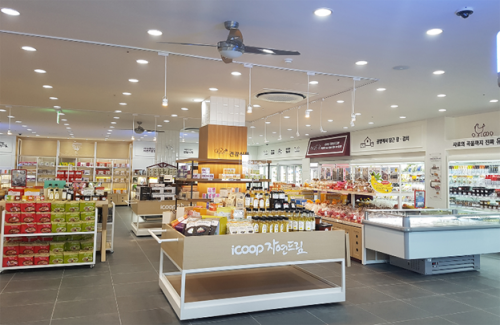
Natural Dream store
In 2014 and 2018, iCOOP opened Gurye and Goesan Natural Dream Parks. The Park project is one of the commitments for social and economic community growth, focusing on collaboration with local governments suffering from a shrinking population. As 29 food factories and logistics are converged in the Parks, they serve as the foundation to provide iCOOP's 1,000 eco-friendly products to members at a reasonable price. For producers, the guarantee of income is realized since the Parks ensure sustainable production and consumption. Moreover, the Parks adopt environmentally sustainable policies on plastic packaging and energy. Lastly, community people enjoy 33 cultural facilities in the Parks such as sports centres or theatres, contributing to revitalizing the local economy and tourism with 200,000 visitors annually, as well as creating employment up to 1,200.
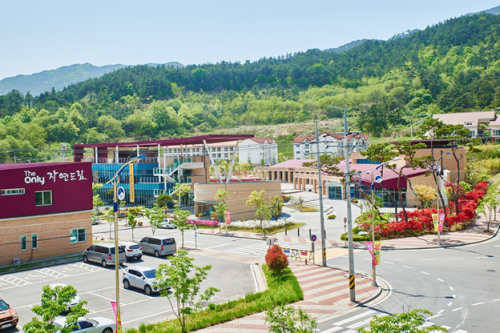
Gurye Natural Dream Park
For cooperatives, it is the power of the members that make all this possible. 2,500 active members lead iCOOP as the director of member coops and member leaders actively participate in coop activities and provide feedback. Members gather the necessary capital for their coops, fulfilling “Member Economic Participation”. Thanks to this culture of self-sufficiency substituted by the systems such as monthly membership dues, responsible investment, and an advance payment mechanism, iCOOP was able to construct infrastructures without borrowing money from banks.
In 2018, iCOOP declared ‘Healing and Restoring’ to treat lifestyle diseases through healthy food consumption and help members maintain a healthy lifecycle. To realize this, it opened a Healing centre and a medical clinic in Goesan Natural Dream Park and operates several programmes including “Healing School” that cures diabetes, high blood pressure and more. In line with this, in 2020, innovation was encouraged in the field of development of “foods that help to heal and restore”. It includes producing Healing Food (HF) brand, microplastic-free salt, gluten-free food and more.
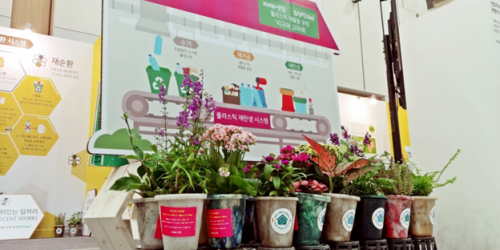
Recycled plastic flower pots made by the recycling facility in Goesan Park
The value of healing and restoring has expanded to the environmental sphere and plastic reduction has become a priority now in business activities. iCOOP has developed alternatives or reduce plastics used in food packaging by replacing plastic trays, plastic handles with paper ones. PET Bottled water was changed into cartons and sugarcane-based vegetable lids. Moreover, unnecessary plastic and vinyl in packaging have been removed and used plastics are recycled in the facility of the Park.
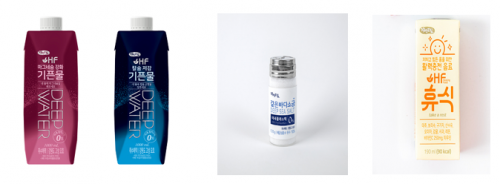
Water in cartons, Microplastic free salt and Healing Food product (from left)
For a bigger movement, consumer members set up a social society “Consumers’ Climate Action'' and resolved to urge consumers' actions to be incorporated into members’ daily lifestyles in response to the climate crisis. These consumers aim to make a difference and extend their influence for a large-scale change. They believe sustainable consumption can drive innovation in production and bring changes in institutions and policies to benefit society.
As shared by Ms. Juhee Lee, International Team Manager, iCOOP.


