
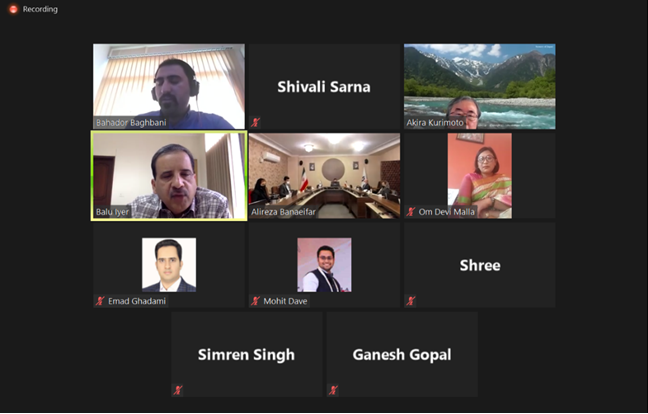
In 2021, the ICA-AP regional office is holding a series of consultations with its members in the region to reflect on how the Statement on Cooperative Identity (SCI) guides their day-to-day operations. The second consultation was held online on 7th March with members in Iran. It was useful to understand the extent to which the members had put the cooperative principles into practice and what progress, or the lack thereof had been achieved.
Ms. Om Devi Malla, ICA Global Board member and member of the World Cooperative Congress Advisory Committee and Prof. Akira Kurimoto, member of the ICA Principles Committee and Chair of ICA-AP Research Committee were present in the consultation to advise and guide the participants during the discussions. They discussed how SCI is used to evaluate cooperatives, how it sets cooperatives apart from other membership and value-based business enterprises, how it fosters member interest and responsibilities, how it enhances the effective ‘cooperativeness’ of their organisations, and how it helps relationships with government and stakeholders.
Central Union of Rural Production Cooperatives of Iran (CURPC) said that members of its cooperatives are elected voluntarily and without any discrimination on the grounds of sex, race, religion, or politics. All members have equal voting rights, and the same members choose representatives from among themselves to manage the cooperative and enjoy the economic benefits of the cooperatives in proportion to their paid-up capital. Secondly, under the subdivisions of the CURPC, the independence of each cooperative over other cooperatives, the government, and investors is fully respected. By cooperating, they strengthen the interests of their members and the cooperative movement and contribute to the sustainable development of communities.
They also highlighted that through continuous training and internship of members, they are ready to face new challenges within the cooperative movement. The equitable distribution of power and economic participation of all members with different financial resources in a democratic way will be very attractive to young people and consequently, will create new opportunities for the cooperatives. They felt that cooperatives are the link between the government and the stakeholders and operate quite efficiently given their democratic and independent identity.
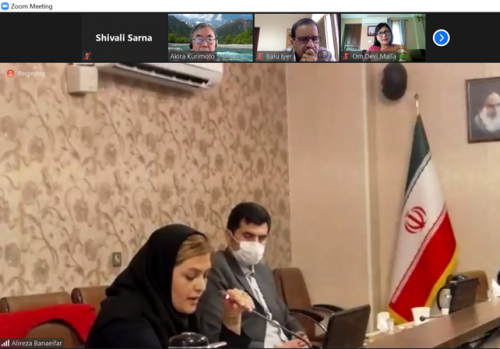
Iran Chamber of Cooperatives (ICC) talked about establishing an association to supervise the elections of subsidiary cooperatives. ICC has played an active and constructive role in supporting the movement in facing natural, environmental, health, and social crises while adhering to the seventh principle of cooperatives, namely Concern for Community. In 2019, ICC facilitated the collection of non-cash and cash donations and assistance to cooperatives affected by the floods in different parts of Iran.
Some of the challenges that ICC faces include :
- Lack of a public monitoring mechanism to assess the adherence of Iranian cooperatives to all the principles and values of cooperatives.
- Lack of institutionalized culture of cooperatives and collective work in the country
- Lack of focus on promoting and teaching cooperative principles and values
- Due to their structure, the indirect dependence of some cooperatives on the government and being influenced by government policies.
- Lack of serious determination and volition of the country's executive bodies to support, strengthen, and develop the cooperative sector.
- Lack of appropriate advertising mechanism in the cooperative sector to promote the cooperative identity statement.
- Lack of bilateral interaction between scientific-academic centres and economic activists in the Iranian cooperative sector.
The cooperative business model was acclaimed by ICC for its distinctive features to make creative businesses that address the needs of the economy by collecting micro-capital and various specialities. Therefore, the SCI, adherence to it, and the structure of cooperatives can be a competitive advantage for the emergence of creativity and attracting young people to the cooperative movement.
The members felt that there was a need to develop cooperation with government agencies in Iran to transfer ownership and management of government enterprises to cooperatives and to use the resources and facilities of other agencies to improve the activities of cooperatives. Appropriate legislation based on adherence to the cooperative identity and proper supervision of the parliament on the full implementation of laws by the executive bodies of the cooperative sector was also discussed.
SCI has enabled staff at Rah-e-Roshd Cooperative Educational Complex (RCEC) to deal with students and their parents transparently and democratically. It preserves their identity and values to respond to their audience. SCI is very compatible with RCEC’s own identity and does not pose any challenge to their educational cooperative. One of the distinguishing features of RCEC is the cooperative nature of its education complex, which is also its competitive advantage over other organisations. They believe that the usefulness of a coop business must be examined first and then its profitability. Worker cooperatives are known to create more sustainable employment for members and are also transparent in the areas of taxation and insurance. This is a double competitive advantage that worker coops in the field of human resources have over other kinds of enterprises.
A challenge that emerged was the lack of criteria to evaluate different cooperatives in the true sense from organisations that bear only the name of cooperatives. The members felt that there was a need for indicators that can measure and evaluate the cooperative principles. As a rule, coop indicators and measurements should be different from private companies and institutions.
The challenge for Farda coop was to make the best use of new technologies to increase productivity and improve production conditions while observing health issues and food standards. They believe cooperatives can be more effective than the Government in increasing productivity, reducing costs, and increasing profits. The movement of the public sector towards cooperatives can help achieve such a goal, leading to the growth of GDP, national income, and per capita income.
Pishgaman Cooperative Union (PCU) has entered various fields with the strength, effort, faith, and perseverance of the residents of desert areas. It is relying on the trust of over 50,000 shareholders and trying to keep this trust as a perpetual capital by identifying the best opportunities for investment and provision of distinguished and high-quality services, PCU managed to continue its activities in unstable economic conditions and expanded its services. The challenges are in the fields of legislation and human resources. PCU has launched the first accelerator in Yazd province to support startups, thereby taking a step to attract young people and explore new opportunities.
The consultation was very useful to get a perspective on the application of the SCI, the challenges seen in practice, and the directions going forward. The COVID-19 pandemic has reinforced the need for models that strengthen the real economy and has shown the relevance of the cooperative model. Most cooperatives in Iran face strong competitive conditions and tend to have successful investments using their cooperative identity. Cooperative, despite some economic obstacles, are trying to promote and expand their communities and integrate people with different culture, religion, and political opinions. One of the main concerns of the Government is civil welfare and providing high - quality services to the people, and cooperatives are accounting for the needs of members and stakeholders to bring about sustainable development.


