
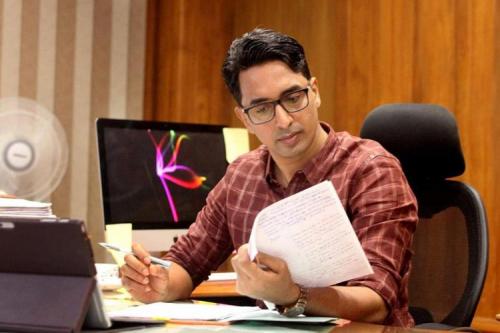
Please tell us something about yourself. How has your journey been as a young and dynamic IAS officer?
I am a 2012 batch Indian Administrative Service (IAS) Officer, an Agriculture graduate, and a post-graduate in Genetics from the University of Agricultural Sciences, Bangalore. I joined the IAS as an Assistant Collector in the Pathanamthitta district of Kerala in 2013 and was there for a year. After that, I became a Sub-Collector & Sub-division Magistrate in Palakkad district for three and a half years. I was fortunate to get an additional charge as the Nodal Officer in a tribal dominant area in Palakkad, where I coordinated all the governmental activities. The opportunity gave me a lot of information and perspective about marginalised communities. I was able to bring down the infant mortality rate significantly in the tribal area and also engage with marginalized communities like transgenders, senior citizens, and the differently-abled.
I was transferred to Pathanamthitta district as the District Magistrate for two and a half years, where the experience was altogether different. I had to go through a lot of disasters – floods, political and the Covid-19 pandemic. In 2018, Kerala experienced severe floods and Pathanamthitta was one of the worst affected districts. Soon after, there was a national level notice of the Sabrimala crisis. After that, the Covid-19 pandemic hit and the first case in India was reported in my district! It was a big challenge, but then it has helped me learn a lot of things. In Jan 2021, I was transferred to the Cooperative Department as the Registrar.
It is about the challenges and the opportunities which you get and all that you get to perform. In that sense, I was fortunate to be there when the major crisis hit. Secondly, when there is a major challenge, you have to perform at a bigger scale to match the crisis level. I feel I was able to deliver something. I was lucky to make use of all available resources, especially the youngsters. I had a volunteer force of some 2,000 to 3,000 youth to assist during the Covid crisis and the floods. They were probably one of the major reasons for my success in managing the disasters. Another interesting point which I would like to highlight here is the way you communicate with the public. Even now, many officers deal with the public in the way it used to be done 100 years back. The colonial-era culture has to be changed, you have to tell the people that you are here to serve and help them and you are here to work with them. When you can convince them, they will respond well. The communication has to be transparent and simple; in a way that a layperson can understand what you are talking about. I have tried to improve communication, make it as simple as possible, and communicate as frequently as possible. We made good use of social media so that anybody could reach the district administration at any time. This way, we were able to create an impression among people that someone is listening and responding. I feel this is the major reason for the success of any administrator.
What kind of an enabling environment do you foresee for youth to be active actors in the growth of the cooperative movement in India?
The first and foremost issue stopping youth from participating in the cooperative movement is the lack of awareness. They have no clue about what cooperatives are, the size of the sector and the possibilities of the movement. We have to begin with an awareness campaign that tells them how the cooperative movement can bring positive change in their life. We need to evaluate the mechanisms we have in India to facilitate business ventures, in any industrial or entrepreneurial activity. The government mechanism available is neither forthcoming nor very healthy. We have to tell youth that cooperatives offer vast possibilities and anything and everything can be done through cooperatives. Second, we have to make the process of registration of cooperatives simpler for youth. In Kerala, we have online registration procedures, by-law registration, and by-law amendment. We are working to make these online platforms more accessible and available. Third, we need to make available single-window services readily available so that anyone can start a cooperative society, get the information and documents all in one place. Fourth, we need to train our youth on the people-centered businesses model of cooperatives, teach them the cooperative principles and values and make them understand the difference between cooperative entrepreneurship and other entrepreneurial models. Fifth, we need to handhold of entrepreneurial ventures and help them to succeed. These five steps probably will help bring in more youth to the cooperative sector.
As the Registrar of Cooperative Societies, Government of Kerala, India, what initiatives are you taking for youth inclusion in cooperatives?
The Kerala government has launched a wonderful initiative of registering 25 youth cooperative societies, to begin with, in 100 days. We aim to register 100 cooperatives societies exclusively for the youth in a year. Instead of focusing on credit activities which the majority of the cooperatives focus on, we will ask them to concentrate on unconventional sectors like IT and IT-related, tourism, labour, service, waste management, agriculture production and others. Wherever one feels that there is a possibility, they can register cooperatives in that sector. The fundamental idea for youth inclusion in cooperative societies in Kerala is to make a better living and contribute to society.
We have already registered 26 cooperatives societies in 75 days which are a mix of both rural and urban. We are spreading the message that cooperatives can be formed in any field and the response has been mind blowing! We have seen interest in agriculture production, agriculture marketing, services and catering cooperatives. For example, there is an artist's cooperative society that focuses on creating audio-video content; In Trivandrum, youth have ideated a services platform for household services at minimal charges; another group is working on waste management.
We have put in place a transparent mechanism and given enough publicity. This is the reason why we could register so many cooperative societies in such a short time. While the first project is for youth, we are also looking at women cooperatives. We have helped them to come up with projects, we will fund them and support them to become financially viable. Since this is the Covid-19 pandemic time, we will be focusing on manufacturing masks and PPE kits. At present, 10 cooperative societies have started working in this direction.
Another interesting project of the Cooperative Department is the Vidya Tarangini project for the youth and as part of the CSR strategy. We have asked all cooperative societies who can afford, to earmark up to Rs 5 and Rs 10 lakh for interest-free loans for the purchase of mobile phones. A person can take an interest-free loan of up to Rs 10,000 for 2 years to purchase a mobile phone. To our surprise, the total number of people who have availed of this loan in Kerala is more than 83,000 and an amount of around 80 crores has been disbursed. Though it is a small intervention, there are two things which we would like to convey through this project – these changing times need changing strategies. We know that the pandemic has affected our education system adversely so, we need to strengthen the online education system and provide students with mobile phones with internet connectivity and ensure every student can attend online classes. This is regarding promoting education and social responsibility. A similar project we are planning to launch for youth is the provision of laptops for college-going students and young professionals with interest subsidies and low interest rates.
I think these initiatives are going to make a big change in the role of youth in cooperatives. In a year, there is going to be a revolution in Kerala about youth cooperatives.
How do you see Cooperative Entrepreneurship? How can the Statement on the Cooperative Identity help stimulate it?
For any entrepreneurial venture, there are certain basic principles that we have to keep in mind like ownership, responsibility, commitment to society. These principles can even help a private entrepreneurship activity to make it a profitable venture. We need to convey to youth effectively that these fundamental principles of cooperatives are sacrosanct, and have to be implemented properly while carrying out business activities. When we ensure that there is a collective responsibility, there is a profit-sharing mechanism and the welfare of the society is taken care of, we will witness members being more responsible and proactive to give maximum output. The best example I can give is the Uralungal Labour Contract Cooperative Society Ltd. (ULCCS). My drivers ask for the kind of salary which the drivers of ULCCS receive. This is possible because the cooperative society is profitable and the profit is shared among the members equally. The cooperative principles and values is to make youth feel responsible for the welfare of society and to contribute back. Once we can inculcate these values, I'm sure that cooperative entrepreneurship is also going to be more successful and will give more results.
What challenges do cooperative societies in Kerala have to overcome to include more youth and become successful future businesses?
100 years ago, cooperative leaders and the cooperative movement were governed by the fundamental principles of cooperatives. I think, this may have been lost to a certain extent over time. We may have to reinvent the fundamental principles of the cooperative movement. A large number of cooperative societies are still focusing on thrift and credit activities. I'm not saying that this is wrong, but a cooperative business is not designed to function only as a bank or credit provider. They need to expand to other activities equally. To promote youth inclusion, cooperatives have to make use of all available resources, all available communication channels which are used by youth to create awareness and spread the message that the cooperative movement is not only for older people but also for them. Cooperatives are a wonderful platform with maximum benefits.
How do you think the newly formed Ministry of Cooperation in India can help facilitate youth inclusion and innovation in cooperatives?
We talk about the demographic dividend in India but are we doing something for the youth, especially in the cooperative sector? I don't think we have focused on youth in the cooperative sector. This is a time when everyone is struggling because of the pandemic. A lot of youngsters have lost their job and have come back to their hometowns from abroad and others places in India. So, probably, this is the right time to make youth join the cooperative moment and tell them the available possibilities. I hope the new ministry and the central government will come up with some new schemes for the youth to attract them to the cooperative movement in India.


