
Co-operatives in Malabar
Co-operative enterprises in the Indian state of Kerala have been promoted by governments successively since the state’s formation in 1956. The Indian National Congress, the Communist Party of India (Marxist) and the Muslim League along with others have attempted to bridge the socio-economic and cultural divide in the society through co-operatives. The northern region of Kerala benefits from various co-operative enterprises in comparison with the rest of the state, the district of Kannur often referred to as the Rochdale of the east has been the cradle of this politically influenced movement of “co-operators”. Following is an account of study visits to co-operatives in the healthcare, producer-consumer and the Information Technology (I.T.) sectors.
Health Co-operatives
Perinthalmanna is a town in the Malabar region of northern Kerala. The town has a population of nearly 100,000 persons and houses the state’s premier multi disciplinary, super speciality co-operative hospital and research centre, named after E.M.S. Namboothripad, a communist and state’s first Chief Minister. Local governments are the chief agents of social change in Kerala and Perinthalmanna has to its distinction, the honour of establishing the first high school, the first court and other administrative units in the country by the East India Company during British colonization of India.
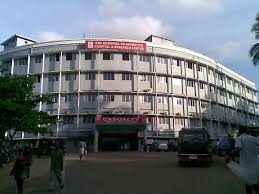
EMS Memorial co-operative hospital and research center
The E.M.S Memorial Co-operative Hospital and Research Centre was inaugurated in 1998 by the then Chief Minister of Kerala, Mr. EK Nayanar. The hospital ran 50 beds out of a rented building for which capital was raised by people from all walks of life, residing or having families in the town. The same space later accommodated 100 beds. Today, the hospital has 540 beds, 100 doctors and 1500 paramedical and support staff and has all facilities of a super speciality hospital in any of the metropolises in the country. Dr. A. Mohammed, the founder chairman of the hospital prides on the fact that all funds raised in establishing the new premises were that by members of the public, in spite of financial firms denying loans to the co-operative on ‘technical grounds’ which the hospital’s General manager Mr. Nasser, explains as the inability to qualify as a sustainable business in the banks view, to be able to timely repay loans. “Support from the people of the area”, Dr. Mohammed added, is key to the progress of its healthcare service industry. The hospital’s management opens membership in the event of raising funds for a project and generates employment for skilled and semi skilled youth (19-40 years). The latest effort was during the establishment of a cardiology lab and hiring heart surgeons. Many doctors in the hospital are members of the co-operative as well and they’re salaried. Members in general are insured for the amount of their share capital and dividends are paid out of the economic surplus that the hospital manages to generate, which it has since only recently. While reinvesting capital in developing the community EMS Coop established an academic campus in the vicinity of the hospital. The education centre provides graduation and post-graduation in nursing and other allied courses. Over one thousand students are currently enrolled in various courses.
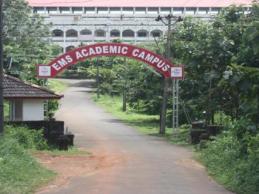

EMS Academic campus EMS Academic block
The foremost achievement of EMS coop is to have rationalise the costs of availing medical care for a community that lives around 250 miles from the capital, Thiruvanathapuram. This is the only co-operative enterprise in India that is accredited with NABH (National Accreditation Board for Hospitals and Healthcare) certification caters to the health needs of 1000 patients (out & In) a day.
Thalassery or Tellicherry is home to two health co-operative movement. Various political outfits have been instrumental in mobilising capital, both human and economic, in building the Tellicherry Co-operative Hospital (TCH) and the Indira Gandhi Co-operative Hospital (IGCH) which is named after one of the tall personalities and former prime minister of the country. Mrs. Gandhi held a position at the ICA Advisory council during the 1970. Roughly started around the same time, TCH and IGCH go back 14 years from when EMS Coop was established. However, it is noteworthy that only EMS Coop generates economic surplus to be given as dividends to members while TCH and IGCH do not. IGCH is a unit of the Mambaram Co-operative Hospital Society Ltd. and has 350 beds and the latest in the field of medicine and surgery. High industrial investment and ethical disposal of waste are cited by Mr. O. Damodaran, General Manager, as reasons for the lack of economic surplus. IGCH started with a small share capital of INR 15, 500/- (or 260/- USD) raised by 79 members in 1984. Today, the share capital is worth 2.53 crores (500,000 USD) raised by 4800 members and counting. The chief contributors being members whose family found employment overseas, particularly the middle-east. Various co-operatives banks in the district have forwarded loans to the cooperative and also form a part of its membership with one vote each. A striking feature of the co-operative is its effort to reach out to nearby sub-districts and conduct health camps as well as provide mobile ICUs in order to help save lives on the move for such remote areas.
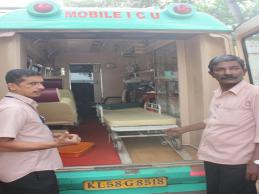
Mobile I.C.U. of Indira Gandhi Co-operative Hospital
Recently the IGCH has procured nearby space to make a larger parking lot. Mr. Mambaram Divakaran asserts his trust in the board of directors while writing for the hospital brochure and highlights the role of the Medical Director who overlooks technical management of the hospital. He further adds collective ambition of providing cardiac surgery service to the area, at affordable costs. Majority of the medical staff in the co-operative is a member of the IGCH.
The Tellichery co-operative hospital, less than 4 miles from the IGCH was awarded the ISO 9001:2000 certificate for providing preventive and curative health-care services. Promoted chiefly by the Communist Party of India, as a social care organisation, the TCH invites the best minds from its citizens even if they’re working in other countries. International level trainings in co-operative management and hospital governance feature with experts from the United Kingdom and Unites States visiting the facility regularly.TCH is in process of establishing a cath-lab as a dedicated cardiovascular centre to meet the growing demand of life style diseases.
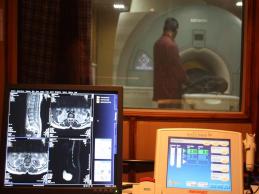
Cath lab
The co-operative houses nutritionists and conducts camps in schools to educate the young on eating and dietary habits. Community health service, mini –mobile hospital and neethi (Justice) medical stores are run by the hospital. Indigenous persons and social activists often receive free treatment. TCH was registered in 1987 and in 20 years raised its capacities to 250 beds, 6 ICUs, 3 CCUs and over 20 speciality departments. People’s participation has overwhelmingly secured health services for everyone if not for all in the Malabar region.
Due to complicated legal relationship of corporations and governments in many states in India, co-operatives proved to be an essential to the socio-ecosystem at TCH. A one of the kind Private-public-partnership was envisioned by TCH, political influencers and leadership and private parties that enabled a PPP model cath-lab facility, distinct from the co-operative hospital, to be created. Though in process of construction, the facility earlier gathered share capital from co-operatives and companies alike but with the realisation of the greater need of the people, in having such a lab in the area, helped co-operatives acquire much of the share on its own leaving corporations with a reduced number. This democratised the whole equation making the PPP model, a true Public (entrusted Governments)- Private (sovereign individuals) – Partnership.
Digitalizing Co-operative
Information Technology is somewhat of a Right of the citizens of today. The definition of which could include the educated, non-fundamentalist internationalists. Internet, Mark Zuckerburg (CEO, facebook inc.) said, was a human right, while he was in India on his way to China in 2014. Asian economies, just by the size of their shareholders, possess enormous opportunities for digitalisation of their key players that include co-operatives. Mr. Nasser who was mentioned as the serving General Manager of the EMS Coop Hospital, was the first managing director of the Information Technology Co-operative Society Ltd, that was started in 2000 under the Integrated Co-operative Development Project of the State in Malapuram. The ITCS serves more than 100 co-operative banks, 30 credit societies and the Government of Kerala in IT solutions. Their service and products are incidental to the co-operatives they serve, for instance, PACSWARE (for PACS or Primary Agricultural Co-operative Societies- a total of 6 lac. in India) and Coop-pay (like Ru-Pay). The ITCS lists its specialisation as software development, system integration, total networking solutions and consultancy. The society has a young chairman and founder-programmers and staffs continue to serve. The latest they are to offer is development of the QR code that could increase the influence of consumer co-operatives in India provided this technology is effectively used. The ITCS throws new light on the formation of industrial co-operatives in India. Digitalisation of co-operatives at the grass roots level will certainly assure uniformity and practice. Having mentioned that, it is for the co-operative movement to introduce social audits to firm up the case for co-operatives as an alternative organisational form in achieving sustainable development and the related Goals. Individual members, social organisations, societies and other stake holders have raised ITCS’s capital. There are a total of 78 members at ITCS.
Producer Collective
The Bhramagiri peak in the bordering (with Karnatak) district of Wayanad is a major tourist attraction for the ‘get-away’ kinds. It is supposed to have housed indigenous persons for over 5000 years and is at a height of 1600 Mts above the sea level. Right on the foothills lies a relatively new social enterprise that owns the popular brand ‘Malabar Meat’.
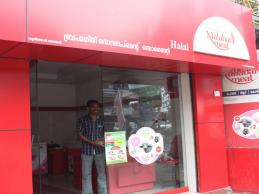
Malabar meat shop
The Brahmagiri Development Society (BDS) came into existence in 1999 with an objective of playing an active role in assisting the farming community in Wayanad. The society calls itself a co-operative, but is registered as a non-profit society under the societies Act, 1860 and not as a Not for profit entity under the co-operative societies Act. The reason, Mr. Krishna Prasad, chairperson and a communist, explains is to stay away from the politics that co-operatives in the region breed. Explaining further, Mr. Prasad, a pioneer in reforming co-operatives stated that, it was quality and effective costs that bothered the market more than if the produce was that of a co-operative or a society. He further added that it was best to assert the position of the quality product through a quality brand first and then transform into a not for profit entity.
The Bhramagiri meat factory (BMF)employs young engineers, veterinarians, ‘MBAs’ and local support staff to run the administration and processing activities of the social enterprise. BMF grants licenses to qualified private individuals to run retail stores of processed meat and ensure cleanliness and hygiene required for this business.
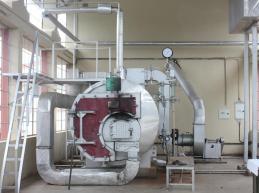
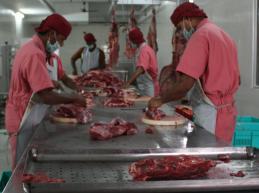
Bharmagiri meat factory Employees working in meat factory
The factory has many feathers in its cap and takes pride in playing a part in achieving food security for a state where 95% persons are meat consumers. Some of the achievements are listed below. 1.) Asia’s largest multispecies abattoir, 2.) India’s first ISO-FSSC 22000 standard based designed meat plant. 3.) India’s first farmers collective in meat industry with Forward and backward linkage, 4.) Technical support from Kerala Veterinary and Animal Sciences University and Animal Husbandry Department, Dairy Development Dept and Supported by the NABARD.
On the whole, it can be said that work in co-operatives in the Malabar region, including Kannur, provides employment to the local youth and skilled personnel. Ample opportunity for participation of people is evidenced by the frequent opening up of membership by the health co-operatives mentioned above. However, it is not clear if members of other co-operatives falling under the broad interpretation of the social-solidarity-economy, such as drivers of the Kochi Airport Taxi Operators co-operative society, have as important a role as the doctors/patients of coop-hospitals play in their management and audit boards. Open and Voluntary membership Principle in its reasonably restrictive form in Malabar’s coop hospitals keeps the choice of social healthcare open to the members of public in spite of their socio-economic/cultural condition.

Farmers working in the field
Agricultural Primaries (PACS) in India constitute the backbone of agricultural credit in the country. Many of the six lac PACS in India suffer infirm managements, politically ambitious leadership and generous governments that waive farmer loans for political gains. Of course, the other side of the coin is rather beautiful. Besides other states with socially successful PACS, Kerala displays a positive attribute of innovations, infrastructural development and capital building. It is only hoped that multinationals do not disturb area’s development plan that has been chosen by state (in terms of the co-operative legislation) and also by the people in providing solutions to the community in a democratic manner, the direct implication of which is evidenced by increase in the organised economy in the state. This is substantiated by the stable contracts for farm labourers and their financial management by the Peringadur Service cooperative bank in Thrissur, Kerala. The ‘bank’ is one of the 6 lac primaries in India and has positively adopted the recommendations of NABARD that urged PACS to add value to their services. The Peringadur Coop has aided in the economic development process of their area of operation by means of establishing a firm link of action with the local self governments and facilitated schemes and programmes like Galasa, Harithasena and EMS Housing Scheme for its members. The bank established an imitative called the green army that is a pool of labourers who are guaranteed better wages, pension schemes, uniforms and machines to help farms yield better. Further, the bank has created space for a supermarket within the bank campus to help people procure inexpensive and local produce easily. With a network of lacs of PACS in the country, initiatives like this could real spell a stronger rural movement and ensure food security for all as well as strengthen the case for co-operatives as the strongest and most viable vehicle for positive change.


