
by Simren Singh, Program Officer, ICA-EU Cooperatives in Development People-centred Businesses in Action, ICA Asia and Pacific
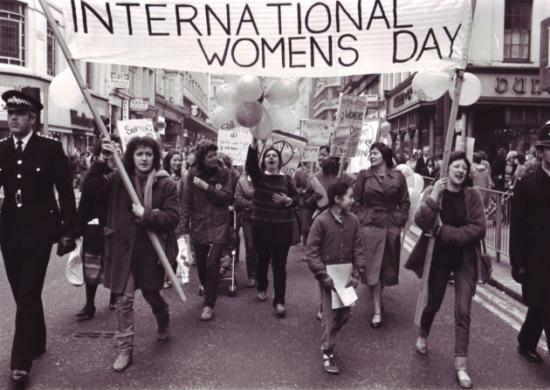
The earliest records of observing women’s day goes back to early twentieth century. Stemming from the simmering demands for the rights of women workers in factories and workshops in the United States, the purview of women’s rights as workers gradually expanded to women’s rights as citizens and ultimately as human beings.
It was in 1909, that the first ever National Women’s Day was observed in the United States in honour of garment workers, who showed resistance against the long working hours and low wages. By 1911, the movement comprising of collectivised resistance and unionised voices for women, turned international. The first ever International Women’s Day was marked on 19th March 1911 by over one million women and men in Austria, Denmark, Germany and Switzerland. In times, when mass rallies were symbolic of popular disenchantment, the demand for women’s rights to vote, to work, to hold public office, to vocational training, and to end discrimination on the job, were loud and clear. Over the decades, more and more aspects involving women caught attention, making International Women's Day symbolic of public sentiment. During the World War years, the mobilisation of women (and men supportive of the cause) represented their stance against the war and the overbearing ramifications it had on their lives. Subsequently, a day that was an expression of discontentment and quest for improved rights, symbolising days of resentment and struggle, took the form of official holidays and half-day-outs for working women in some parts of the world, especially in socialist countries during the 1950s and 60s. However, the burgeoning international women’s movement in the world was still fragmented.
It was not until 1975, when the United Nations declared it as the International Women’s year, that the consolidation of voices to institutionalise change at the global level, began for the first time. The year also marked the launch of a dedicated decade (the United Nations Decade for Women: 1975-85) to focus on policies and issues that impact women at large, such as, pay equity, gendered violence, land ownership, women’s education, and a wide range of other human rights. The concerted efforts of women activists and leaders who represented their local social-cultural- political and gendered milieu in a preliminary globalised world, were formalised post 1970s, at the international level.
The World Conference of the International Women’s Year in Mexico City in 1975 is one of the foremost steps towards the formalisation and recognition of a worldwide women’s movement. The Conference resulted in the Declaration of Mexico on the Equality of Women and their Contribution to Development and Peace, that laid out a set of principles concerning the equality of men and women. The Conference also defined a World Plan of Action for implementation of the objectives of the International Women’s Year, which offered a comprehensive set of guidelines for the advancement of women. This was followed by three other World Conferences (Copenhagen in 1980, Nairobi in 1985 and Beijing in 1995). The last World Conference on Women held in Beijing, resulted in the Beijing Declaration and Platform for Action, which is considered a historic agreement signed by 189 governments, focussing on 12 critical areas (poverty, education and training, health, violence, armed conflict, economy, power and decision-making, institutional mechanisms, human rights, media, environment, and the girl child), and envisioning a world where each woman and girl can exercise her choices, such as participating in politics, getting an education, having an income, and living in societies free from violence and discrimination. The international women’s movement has, thus, been strengthened by these four global conferences that have been devoted to garnering worldwide support to women’s rights and their participation in political and economic spheres.
International Women’s Day 2020 marks the 25th anniversary of the Beijing Declaration and the Platform for Action. According to UN Women, “the year 2020 is a pivotal year for advancing gender equality worldwide, as the global community takes stock of the progress made for women’s rights since the adoption of the Beijing Platform for Action. It will also mark several other galvanizing moments in the gender equality movement: a five-year milestone towards achieving the Sustainable Development Goals; the 20th anniversary of UN Security Council resolution 1325 on women, peace and security; and the 10th anniversary of UN Women’s establishment.” On this occasion, the UN Women also notes that, “the emerging global consensus is that despite some progress, real change has been agonizingly slow for the majority of women and girls in the world. Today, not a single country can claim to have achieved gender equality. Multiple obstacles remain unchanged in law and in culture.” Thus, the theme of this year’s women’s day by the UN Women, ‘I am Generation Equality: Realising Women’s Rights for an Equal Future’ becomes symbolic of all the collectivised resistance and unionised voices that have been in existence by and for women throughout multi-generations, including the present one.
Over the last few decades, it has been widely observed that International Women’s Day, in a more privatised and globalised world has become symptomatic of a universal need to recognise women in an exclusive way. The day, which is now observed on the 8th of March every year, is usually marked with events, contests, shows, and a series of feel-good messages and gestures, such as, women-friendly discounts and sponsorships, and is, increasingly characterised by less of collectivisation of women demanding radical albeit progressive reforms. 2020, thus, also becomes important in a more significant way. It offers the world an opportunity to steer attention from the much-appreciated celebrations to more fundamental issues at hand. That is, a reflection on, if women have an enabling environment where they can be actively involved in various stages of decision making.
In other words, 2020 gives an opportunity to take stock of women. For example, are we still the ‘other’ exclusive gender in decision making, or have decision making processes become more inclusive and integrated, recognising women's needs, capabilities, and aspirations? The theme of this year’s women’s day- ‘I am Generation Equality: Realising Women’s Rights for an Equal Future’ throws a critical question at us, whether we are willing and ready to partake in a gender-equal future, that is fundamentally representative of critical and progressive reforms for women.


