
The Ministry of Agriculture, Forestry and Fisheries (MAFF) of the Government of Japan had chosen the International Cooperative Alliance (ICA) to implement an umbrella Project on “Strengthening Capacity Building in Agriculture Sector in ASEAN Countries (CB Project)” for three years starting from 2014. The project consisted of three training courses and a follow-up guidance and survey of ex-participants.
A three-member team consisting of Mr. Toru Nakashima, Manager, Training Department of IDACA; Ms. Hiroko Tayama, Program Coordinator of IDACA; and Mr. K. Sethu Madhavan, Advisor, Membership of ICA-AP visited Delhi and Bangalore (India) from February 12th-17th, for the follow-up guidance and survey of ex-participants
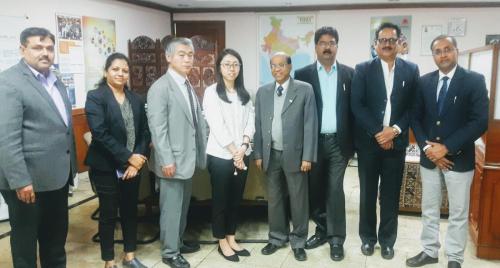
The Team visiting Delhi
The purpose of the follow-up guidance and survey of ex-participants was to assess the impact of training of the past three ICA-MAFF training courses from 2014 to 2017. In particular, to see how Action Plans drafted by the participants were being implemented upon return from the training courses to India. The follow-up study was conducted through a questionnaire, exchange of views and ideas with the participants and visits to some of the co-operatives where the participants were working.
The team members visited the following organizations: (a) National Cooperative Union of India (NCUI); (b) National Federation of Cooperative Sugar Factories Limited; (c) Krishak Bharati Cooperative Limited (KRIBHCO); (d) The Palwal Cooperative Sugar Mills Limited; (e) Regional Institute of Cooperative Management (RICM); (f) Yachenahali Primary Agriculture Credit Cooperative Society Limited; and (g) Horticultural Producers Cooperative Marketing and Processing Society Limited (HOPCOMS).
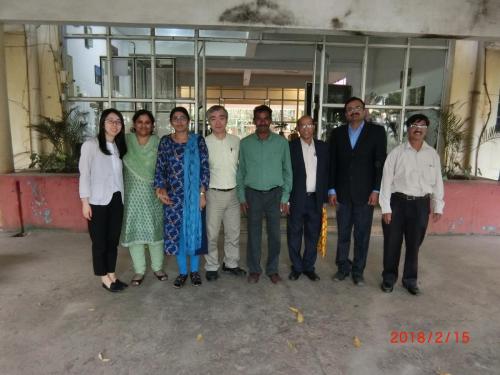
The Bangalore leg of the visit
Seven out of eight participants who attended the training courses from 2014 to 2017 attended the joint meeting on February 12th at NCUI in Delhi and on February 15th at RICM in Bangalore. Most of the participants had implemented their action plans. The implementation of action plans for some exceeded expectation. One participant could not implement her action plan due to financial constraints. The sponsoring organizations said the training courses were very useful and should be continued as there were significant improvements in the performance of participants after they had attended the training courses


