
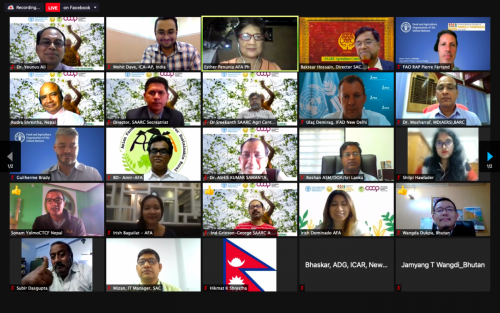
ICA-AP and the SAARC Agriculture Centre (SAC) in collaboration with Asian Farmers’ Association for Sustainable Rural Development (AFA) and Food and Agriculture Organization Regional Office for Asia and the Pacific (FAO RAP) organized, “Review and Finalization of the Regional Action Plan for Family Farming in South Asia,” on 29 July 2021. The consultation brought together over 75 participants from SAARC countries, government, family farmers organizations, cooperatives, civil society and research institutions.
The consultation was to officially launch the book, “United Nations Decade of Family Farming 2019-2028: Regional Action Plan to Implement the UNDFF for Achieving the SDGs in South Asia.” The book was produced out of the first consultation in November 2020. The webinar was also to present, validate, and endorse the draft Regional Action Plan for Family Farming in South Asia. The book, published by SAC, FAO, AFA and ICA-AP compiled the status of family farming in SAARC countries and recommended contextualizing the different pillars of the Global Action Plan for Family Farming in the South Asian context.
Mr. Balasubramanian Iyer, Regional Director, ICA-AP welcomed the participants and shared his opening remarks as a co-organizer. He stressed on the importance and relevance of cooperatives in family farming to achieve sustainable food systems. Mr. Mohit Dave, Programme Manager, ICA-AP coordinated the discussions on supporting youth and ensuring the generational sustainability of family farming. Ms. Meena Pohkrel, Director-in-charge, Nepal Agricultural Cooperative Central Federation identified key policies, actions, and studies/research that need to be undertaken at the national level and that will further support the development and implementation of a Regional Action Plan for UNDFF.
The Action Plan aims to facilitate and accelerate the process of developing national action plans through inclusive multi-stakeholder processes (governments, farmers organizations, civil society, research organizations, cooperatives and private sector), not only putting family farmers at the centre but recognizing them as critical partners. The participants committed to operationalizing the UNDFF regional action plan at the country level through the development and implementation of National Action Plans. The virtual consultation was useful to finalize the action plan in an inclusive and participatory manner with endorsements from all relevant authorities.


