
The ICA-EU Partnership launched the Global Cooperative Entrepreneurs project (GCE), inspired by the success of Cooperatives Europe’s CoopStarter 2.0 Erasmus+ funded project. The underlying objective of the GCE project is to set up an experimental global community of Mentors, mutualize tools and resources and implement activities for cooperative entrepreneurship. The Mentors were drawn from ICA member organizations and other youth organizations. From Asia and Pacific, there were five mentors from three countries - Indonesia, India and Malaysia. The training took place from March 18 to 21 and was facilitated by Angela Colebrook (Head of Learning and Development) and Amanda Benson (Projects and Research Coordinator) from the Cooperative College of Manchester.
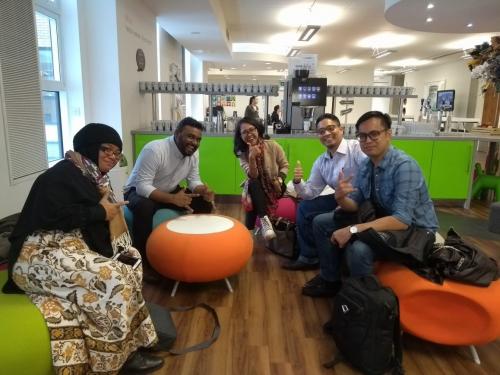
Mentors from Asia and Pacific Region (L to R) Heira Hardiyanti (Indonesia), Moosa Mehar (India), Anis Sadaah (Indonesia), Mohd. Adzhim (Malaysia), Mohd. Idzdihar (Malaysia)
Each day began with an icebreaker to help mentors move out of their comfort zone and gel together. There was a common thread across the activities that took place over four days. At the start of each activity, the mentors were grouped in such a way that the group comprised of different individuals. This was followed by brainstorming sessions with flipcharts, post-its, markers which culminated in a creative illustration on a big sheet. An individual was chosen to represent the group and present its ideas. The feedback from all the presentations was collected and documented to make the GCE project logical and reflective of the young cooperative voice. Each day concluded with an evaluation activity, which was used to improve the activities next day.
Day – 1: The first day focused on setting up base and warming up the mentors. The mentors were then introduced to the GCE project. The vision is to build cooperatives of young individuals while acknowledging it is a step-by-step process to reach there; starting with this training.
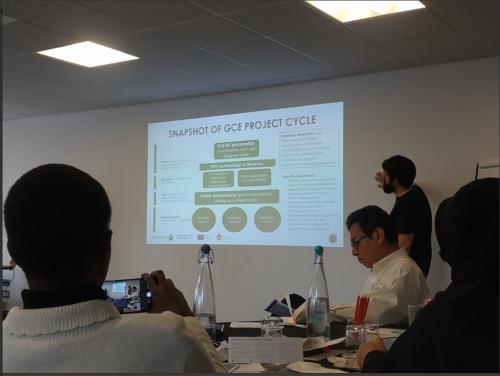
Presentation on the GCE project cycle
Mentors were introduced to the Knowledge base and their feedback on the same was recorded. The mentors were provided an in-depth understanding of different learning styles to help them identify the learning style their ambassador has, thus helping them to develop an appropriate action plan. But before mentors could gauge their ambassadors, they need to know how to ask the right questions and be good listeners. Both were demonstrated via activities, to make mentors ‘realize it’ rather than the conventional ‘teach it’ approach. The mentors are expected to recruit ambassadors who are individuals who are closer to ground reality and have some degree of social impact. They will be mentored by mentors mentioned above in conducting the three local multiplier events.
Day – 2: The training was gathering its momentum, and everyone could feel it. But before mentors could hit the road, they needed an icebreaker. This time it was called ‘Dive Evaluation’ and was a lookback on the previous day’s activities. The day began with each mentor writing a persona of an ambassador they were going to recruit. The persona could be of someone they knew or even a hypothetical person with ideal characteristics.
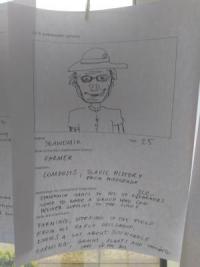
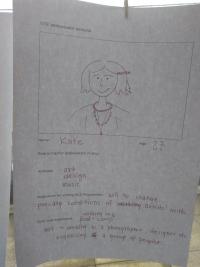
A couple of personas written by mentors
All these personas were discussed amongst the mentors with each mentor providing a rationale for their choice. This was then followed up with a brainstorming session on the method(s) to recruit ambassadors.
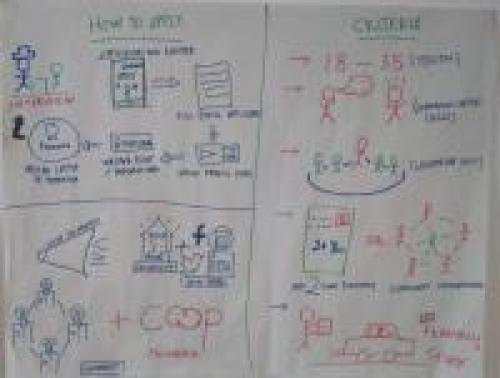
The INs and OUTs of recruiting ambassadors.
Day 2 also included preparation and planning of mentoring sessions with documentation at its heart. This activity was carried out in the ‘World Café’ format.
Day – 3: No icebreaker activity was needed as the sun was enough to break the ice with its warmth (Weather was cold and gloomy on the first two days, often supplemented with light drizzle). The highlight (sunshine!) of day 3 was the discussion on the three local multiplier events. The first one was “let’s cooperate”, where ambassadors would make everyone aware of all the resources and tools that exist, helping in forming a new cooperative. The second one was to carry out a cooperative hackathon with the community to come up with a solution for the ‘concerns of the community’.
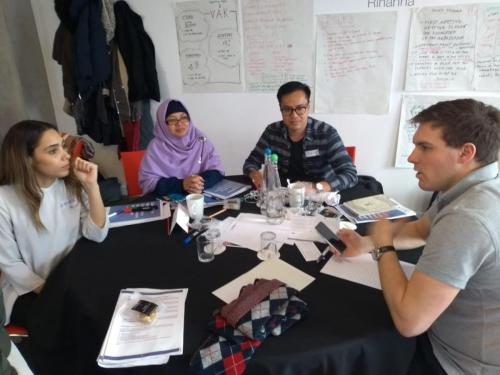
Mentors deliberating on how to help ambassadors to have their own cooperative hackathons!
Day 3 also provided us an understanding of the difference between coaching and mentoring and which technique is to be used when. We also tested the GROW (Goal - Reality – Opportunity – What next?) model to develop solution-based communication between mentors and ambassadors.
The sun set on day 3 with a self-evaluation of mentors where they rated their mentorship skills, pre and post training. Day 4: - Everyone could feel that end was nigh, but surely the training ended on a high. ‘Skill swap speed dating’ not only stood out on day 4, but was also the most outstanding feature of the whole training program. It was like any another speed dating session, but the talks rotated on what skills the mentors had and lacked and how they could assist each other in becoming better. The day ended with the drafting of the final action plan which mentors would implement in their respective countries. Before everyone bid goodbye to each other, all acknowledged that the training was just the birth of something big that ahead of us. That there is a lot of hard work and planning that will follow; that there will be mistakes made in the process but then there will be learning and adaptation from the same. Most importantly their work will contribute to the greater good of this world!
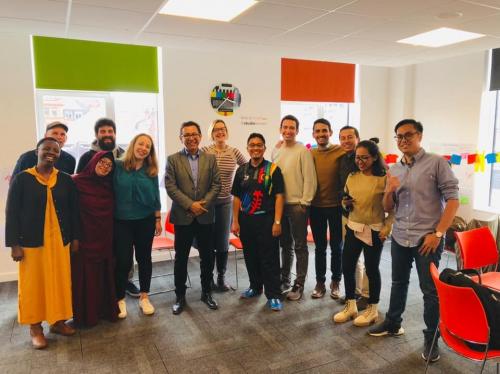
Before saying Goodbye to each other


