
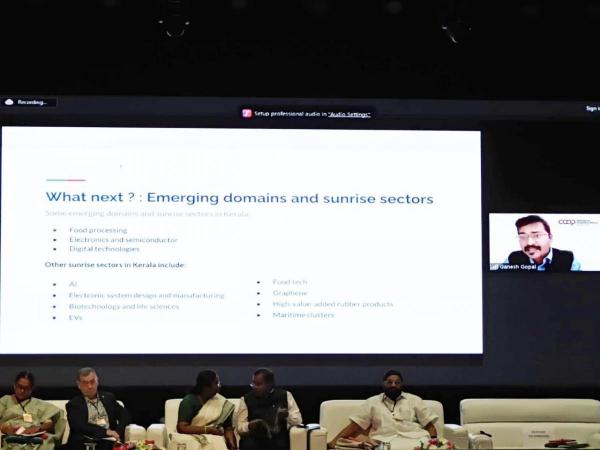
Keraleeyam 2023, organised in the capital city of Thiruvananthapuram by the State Government of Kerala (in India), served as a platform for reimagining cooperation in the state and celebrating the essence of Kerala. One of the talks and presentations titled ‘Reimagining Cooperation in Kerala’ within the panel discussion on ‘Cooperatives in the State of Kerala’ held on 4 November 2023, was delivered by Mr. Ganesh Gopal, Lead-Entrepreneurship Development at ICA-AP. The discussion delved into the rich history and evolving role of cooperatives in Kerala, addressing current challenges and charting a course for cooperative innovation.
Kerala's Cooperative Movement: Beyond Tradition
Mr. Gopal began by underlining the historical significance of cooperatives, initially established as defenders of the marginalised during the Industrial Revolution. Today, Kerala boasts over 14,000 cooperative societies with a membership exceeding 10 million individuals. While credit cooperation mostly through a network of cooperative banks and Primary Agricultural Credit Societies (PACS) remains strong, there needs to be a concerted effort to diversify into potential areas of value-added products, exploring sectors like food processing, electronics clusters, and export-oriented industrial parks etc. as well where Kerala has an inherent strength and advantage in.
The discussion dissected Kerala's cooperative and developmental challenges, including limited land availability, brain drain, food safety and security, skilling, and educated unemployment. Despite these challenges, cooperatives have shown resilience, particularly during crises like the COVID-19 pandemic, acting as community-led forces for rapid response in health, education, medical, and public distribution systems. Beyond crisis response, cooperatives in Kerala are exploring newer aggregation models for production in a primarily consumerist state.
Kerala's cooperatives were highlighted as an instrument in building a climate-resilient economy. The emphasis was on bottom-up movements through cooperation, sustainability, and the potential for environmental cooperatives, drawing inspiration from successful models in countries like the Netherlands.
Global Exchanges and Relatable Examples
Mr. Gopal emphasised the importance of global exchanges and relatable examples. Notable models such as the Emilian Model in Italy and the Mondragon model in Spain were cited, showcasing how cooperative networks can thrive, diversify, and address unemployment.
Emerging Domains and Sunrise Sectors
The discussion turned towards emerging domains and sunrise sectors in Kerala, including food processing, small-scale electronics, digital technologies, and more. The potential for cooperative entrepreneurship in newer domains like gig and knowledge economy, community data trusts, and decentralised autonomous organisations (DAOs) was explored.
He provided key statistics on educated unemployment in India, stressing the need for cooperatives to tap into the vast human capital within Kerala's tertiary sector. With over 50% contribution to India's GDP, the service sector was identified as a significant arena for cooperative innovation and alignment to tap into the gig-platform economy. Mr. Gopal concluded by outlining essential components for cooperative entrepreneurship in Kerala, including an enabling legal environment, inclusion of women and youth, and promoting cooperatives as business entities. The potential for cooperatives to respond to the challenges of the Fourth Industrial Revolution and drive sustainable development in Kerala was underscored.
Keraleeyam 2023's seminar on cooperatives in Kerala provided a comprehensive overview of the state's cooperative movement. The panel's diverse line-up, including government officials, industry experts, and international representatives, contributed to a holistic discussion on the future trajectory of cooperative entrepreneurship in Kerala. Notable panellists included Mr. V.N. Vasavan, Hon'ble Minister for Co-operation, Mr. K. V. Shaji, Chairman, NABARD, Ms. Simel Esim, Head, Cooperatives Unit ILO, Mr. Gopi Kottamurickal, President, Kerala Bank and Mr. Remeshan Paleri, Chairman, ULCCS, an ICA member organisation from Kerala, India.
The historical roots, current challenges, and future aspirations were explored by the panel, setting the stage for a new wave of cooperative innovation that can drive prosperity, equity, and sustainability in Kerala. The session opened a dialogue on how cooperative models can adapt to the evolving socio-economic landscape, ensuring a brighter future for the people of Kerala.


