
Global warming and corresponding climate change are disturbing ecosystems across the world and adversely impacting human existence. The Indian Farm Forestry Development Cooperative Limited (IFFDC) is playing an important role in the restoration of the ecosystem to mitigate and develop resilience to climate change at the community level.
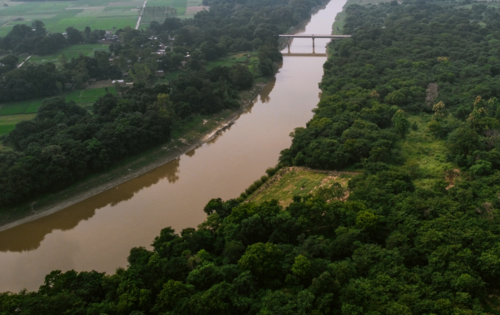
IFFDC, an initiative of Indian Farmers Fertiliser Cooperative Limited (IFFCO), since its inception, has undertaken eco-restoration and wasteland development through farm forestry in the Indian states of Uttar Pradesh, Madhya Pradesh, and Rajasthan. IFFDC has diversified portfolio activities such as Watershed Management, Nutritional and Economic Security, Livelihoods, Seed Production, Agri-Input Supply, and CSR initiatives which it carries out through cross-cutting Interventions i.e., Women Empowerment, Community Institution Building, Capacity Building, and Income Generative Activities. These are carried out by adopting participatory approaches that cater to the emerging and evolving needs of the community.
Farm Forestry Development
Through its flagship programme of Farm Forestry, IFFDC develops participatory forestry on waste and marginalised lands of individual farmers, village panchayats (local governance bodies) and the Government. The concerned communities are organised into Primary Farm Forestry Cooperative Societies (PFFCS), designed as gender-focused community institutions to manage and maintain the community forests sustainably. IFFDC supports the PFFCS with technical, financial, capacity building, networking, marketing, and financial resources. Women have 38% membership in PFFCS and at the decision-making level, there are 20 women as Chairpersons in the PFFCS. Two elected women Directors from the member cooperatives are on the Board of IFFDC.
IFFDC’s interventions have resulted in the restoration and conversion of 29,421-hectares of wasteland in more than 500 villages to multi-purpose and bio-diverse forests. The economic returns from these forests are presently restricted to selective felling, grasses and Minor Forest Produce (MFPs). However, the environmental services/ benefits to the community are intangible.
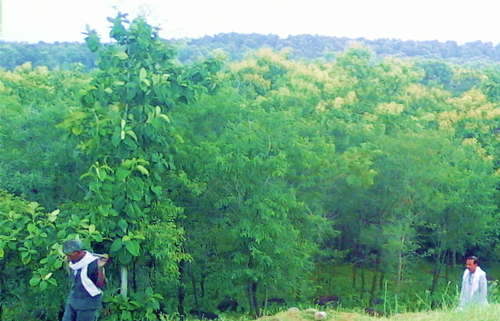
Agro-forestry on farmland achieve the twin goals of sustainable development of forests and enhance the income of the farmers. For five years, IFFDC has been encouraging farmers to undertake Agro-forestry and Agro-horticulture on their farmland with trees like Melia composita, Bambusa bambos, Moringa oleifera, Carica papaya, Musa acuminate, etc, which have growing commercial value. 0.57 million plants of Melia composita have been planted under the program.
IFFDC has made efforts to conserve more than 100 indigenous species of trees that are on the verge of extinction by developing the “Golden Jubillee Traditional Garden” on 30 hectares of land at IFFCO Aonla. It introduced the “Miyawaki Method” (a Japanese technique) for faster development of indigenous species. IFFDC has distributed more than 2.90 million Neem (Azadirachta indica) saplings to IFFCO for plantation across the country to increase tree cover and minimize air pollution.
IFFDC, as part of its R&D efforts, has undertaken four research trials of 153 Genotypes and established a Gene bank of different 44 progenies of Neem (Azadirachta indica) with the support of IFFCO and technical guidance of Forest Research Institute (FRI), Dehradun. Under its CSR initiatives, IFFDC contributed to a research trial to study the adaptability of 11 varieties of Melia Composita (Burma Neem) in the Semi-Arid region, conducted by FRI, Dehradun.
The forests developed under the programme take carbon and reduce soil erosion by 134,000 tonnes each year. The forests also cater to fuelwood, fodder, and other agricultural needs, as well as generate employment for the communities. The developed wastelands are converted into bio-diverse forests with various flora and fauna. The water-logged area developed in the dense forests provides shelter for migratory bird and a wildlife sanctuary.
Watershed Management
IFFDC’s watershed programme with the climate-proofing component rehabilitates and conserves land and water resources to develop climate change resilience and ensures food and livelihood security of the rural communities. An area of 17,480 hectares has been treated by various soil and water conservation measures to develop Integrated Watershed through the 64 Village Watershed Committees (VWCs), the community-based institutions promoted to sustain the watershed and climate-proofing interventions.
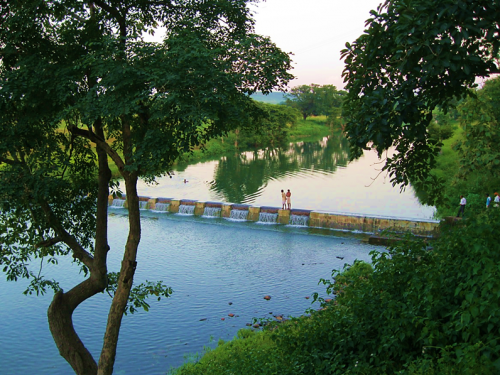
Recharged groundwater and increased water in the nearby wells have enabled farmers to harvest two crops leading to more returns. Harvested surface water, through the developed 261 Check Dams, 1117 ponds and 1213 wells have helped in irrigating an additional area of 15,171 hectares. It is estimated that the soil-water conservation measures checked soil erosion and saved the loss of more than 62,000 metric tonnes of soil per hectare per year. The Watershed Community is made aware of climate change, its effects, and tools and techniques to deal with it in drought conditions.
The role of IFFDC as a cooperative society in ecological restoration has been recognised twice with the prestigious “Social Impact Awards” by the Times of India in 2011 (Livelihood Category) and 2015 (Environment Conservation Category). IFFDC and its 4 promoted PFFCS have also been awarded “Indira Priyadarshini Virkshamitra Awards” by the Ministry of Forest and Environment, Government of India for their outstanding contribution to restoring ecosystem and environment up-gradation.
The efforts of IFFDC exemplify the important role that cooperatives play in climate action by adopting mitigation and adaptation measures and by mobilising and organising their members/ communities to generate livelihood through ecosystem restoration.


