
The National Cooperative Union of India (NCUI) organized a two-day (September 12-13) program on cooperative development for Kendriya Vidyalaya (central school) teachers in New Delhi, India. The goal of the program was to familiarize school teachers with the concept of cooperatives, its values and principles, and provide them with tools to advocate for cooperatives among their students.
ICA-AP was invited to deliver a lecture on youth and cooperative entrepreneurship. This was a unique opportunity for me as I was going to deliver a lecture to a cohort who does this on a daily basis! I began by asking them what came to their mind when they thought of cooperatives? It was motivating to hear answers like ‘People’s enterprises’ and ‘community driven not profit driven.’
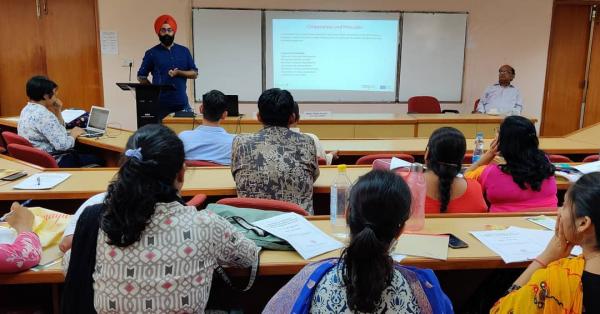
Image Credit: NCUI
In my lecture, I focused on the activities of ICA-AP, the ICA-EU Partnership, and the work ICA-AP has been undertaking in the field of “youth and entrepreneurship amongst cooperatives”. The audience was impressed with Coopathon and expressed interest to experiment with this in their schools. The Global Cooperative Entrepreneurs (GCE) program was discussed in detail, including its goals, its activities and the GCE Ambassadors Training.
The high point of the lecture was the video on Koperasi MRSM Kepala Berhad, a thriving school cooperative in Malaysia filmed by the Around The World dot Coop project . The teachers admired the cooperative model, but were apprehensive about how they would implement it in their schools. They appreciated the Malaysian government’s efforts to legislate the formation of school cooperatives. The teachers felt that through school cooperatives, their students would benefit by:
- Getting hands on practice of subjects E.g. Accounting
- Inculcating a sense of responsibility at an early age
- Reducing dependency on external sources of funding by channelizing the earning from the school cooperative towards student-development activities.
- Sharpening soft skills like communication and relationship building.
Two case studies were presented to show how young people can successfully run cooperatives. The first was ‘Innocircle’, an organization incubating cooperative start-ups in Indonesia. Innocircle provides services of Market research, Financial Viability, and Skill Mapping (building teams with diversified skills). The second was Kopma UGM; a student’s cooperative set up in Univeristas Gadjah Mada, Indonesia.
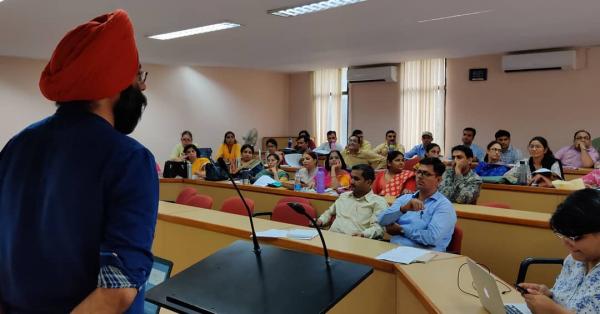
Image credit: NCUI
The lecture concluded with discussions where the audience felt that cooperatives need to be given more significance in the school curriculum. It was recognized that the NCUI program was a step in the right direction, and similar such interactions can be planned for students through events like the Coopathon. Some of the teachers were willing to take forward the idea of setting up school cooperatives with support from relevant stakeholders.
Written by Mr. Ivjyot Singh, Program Officer, ICA-AP. The views expressed here are personal.


