
Given the current pandemic and the ensuing difficulty in conducting offline training and organizing physical events, the International Labour Organisation (ILO) has developed an online version and materials for the delivery of their tool – Think.COOP. Think.COOP is a tool developed by the ILO Cooperatives Unit as an orientation exercise for introducing individuals to the cooperative model. It is one among the two tools developed by the ILO around cooperatives – the other being Start.COOP which is a step-by-step tool to start up a cooperative.
The ICA Asia and Pacific’s Global Cooperative Entrepreneurship (GCE) team of mentors & ambassadors (GCE Catalysts) went through the easy to use tools and to understood how it can be used to rally people, particularly youth in the context of GCE, around the idea of starting-up cooperatives. GCE catalysts also provided detailed feedback to the ICA after testing the tool, which was, in turn, conveyed to the ILO.
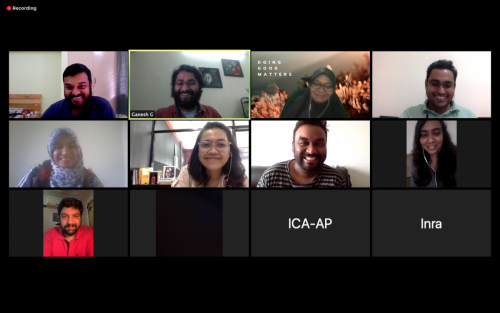
The Team Coordination Call (TCC) for the GCE Programme of the ICA-AP region was held on 10th September 2020. This was the 2nd TCC meeting after the one held on 26th June 2020.
The roundtable meeting was primarily in the light of the COVID-19 pandemic to review the state of activities and action plans within the GCE programme. The meeting saw candid discussions revolving around concerns and challenges, and brainstorming of ideas move ahead by adopting to the new normal. Creative ideas were suggested to organize training sessions and webinars for the capacity building of the GCE catalysts. It was discussed that they could, in turn, explore organising multiplier events online by first mobilising local youth and moving them to an online platform. The meeting was attended by all the GCE mentors and ambassadors and resulted in a productive exchange of ideas towards improving the programme’s implementation.
The meeting included an introduction session to the Coopedia Knowledge Base and to discuss as how the GCE team can help populate & popularise the database. GCE catalysts from Indonesia suggested a translated version of the same into the local language and also showcased their ongoing attempts to create localised literature in the Bahasa language and ultimately work towards creating a database for cooperatives in the vernacular language in the country.
The meeting also discussed future projects envisaged by the ICA-AP to engage with youth in the region to introduce technology-tools and innovation into the traditional cooperative model and explore the creation of collectives which solve specific problems affecting local communities and that which have emerged during recent times.


