
By Mr. Pierre Ferrand, Agriculture Officer (Agroecology), FAO
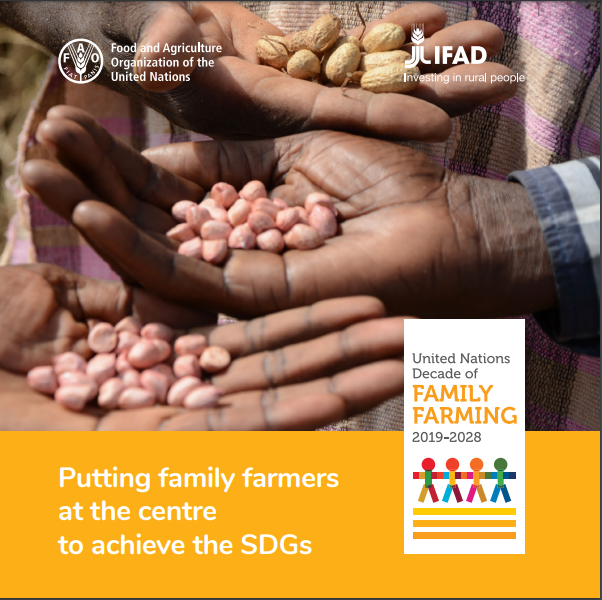
For many years, Food and Agriculture Organisation (FAO) has been working with governments and other relevant actors to put Family Farming at the centre of the international debate on agriculture and food security. In 2014, FAO led the celebration of the International Year of Family Farming which attracted the world’s attention to Family Farming’s important role in alleviating hunger and poverty, providing food security and nutrition, improving livelihoods, sustainably managing natural resources, protecting the environment, and fostering sustainable development. The Asia Pacific region showed its commitment to this cause with the Philippines chairing this successful International Year. The main outcome of the International Year of Family Farming was the strong political commitment in favour of family farming which rose to the highest global level, leading to the formulation and improvement of national and regional policies, programmes, activities and institutional arrangements in its support. This was reinforced by the launch of the United Nations Decade of Family Farming (UNDFF) in May 2019, together with the Global Action Plan.
The UNDFF serves as a framework for countries to develop public policies and investments to support family farming from a holistic perspective, thus contributing to achieving the Sustainable Development Goals (SDGs) by unleashing their transformative potential. The Global Action Plan was developed through a systematically organized 6-month-long consultation process including all relevant stakeholders. It provides guidance to further unleash the potential of family farmers through a series of indicative and interconnected actions from the global to the local level along seven mutually reinforcing pillars of work and by ensuring generational renewal and gender equality in rural areas.
Over the last two years of the UNDFF implementation, several initiatives at the national and regional levels have been carried out, mostly through the contextualization of the Global Action Plan to address the local challenges.
National and regional action plans are contextualized frameworks of action for supporting family farming. They promote inter-institutional cooperation aimed at the integration of specific family farmers’ issues into policies and strategies related to wider food and agricultural sectors. They also promote the integration of broader social and environmental sector considerations into dedicated policies for family farmers.
So far, out of the nine National Action Plans approved worldwide, three are from the Asian region (Indonesia, Nepal and the Philippines) and five countries (Bangladesh, Cambodia, India, Japan, Lao PDR) have mobilized all national stakeholders and are leading the consultation process to draft their national action plan. Additionally, regional consultations have also been launched to draft regional action plans, specifically in South Asia (in collaboration with the secretariat of the South Asian Association for Regional Co-Operation, SAARC) and in South East Asia (in collaboration with the secretariat of the Association of Southeast Asian Nations, ASEAN).
Inter-governmental agencies like SAARC are instrumental in advancing family farming since they offer the right platform to encourage multi-stakeholder and inclusive policy dialogues and cooperation. This provides a relevant framework to foster experience sharing between member states and other stakeholders.
The development of the Regional Action Plan for South Asia has been possible with the continuous support from the SAARC Secretariat in mobilizing the member states and the SAARC Agriculture Center whose mandate is to support agricultural research and development, policy planning, and knowledge management in the region.
With their active participation and in close collaboration with the Asia Farmer Association for Sustainable Rural Development (AFA) and the International Cooperative Alliance – Asia and Pacific (ICA-AP), a first virtual Regional Consultation Meeting on “UN Decade of Family Farming: Formulating Strategies and Action Plan to Strengthen Smallholder Family Farmers in South Asia” was organized in November 2020. The event gathered over 150 participants from SAARC countries (from government, family farmers’ organizations, civil society, experts, professionals, research institutions and cooperatives). National Focal Point Experts of SAARC Member States, with other government officials, presented the situation of family farming in their country and ongoing and planned efforts to make a national action plan for the UNDFF.
This initial regional consultation marked an important step in jointly elaborating the draft regional action plan. It contributed to defining the key priorities, strategies and actions to implement the UNDFF in South Asia. A follow-up consultation was then organized on 29 July 2021 to present, discuss and validate this draft Regional Action Plan.
This Regional Action Plan is almost finalized and expected to be endorsed by the SAARC member states in the coming months. It will aim at facilitating and accelerating the process of developing national action plans through inclusive multi-stakeholder processes, not only putting family farmers at the center but recognizing them as critical partners.


