
The first ever conference on Platform Co-operatives was held in Hong Kong from September 28 to 29. The “Sowing the Seeds: Platform Cooperativism for Asia” at the Chinese University of Hong Kong (CUHK), was attended by more than 100 people from all over the world and including cooperators, IT professionals, academics and students. Professor Trebor Scholz introduced the concept of “Platform Cooperativism” and the discussions that followed centered around how the platforms operate, their origins and development, and efforts to start-up. The participants were also introduce to successful platform co-operatives like Fairmondo, CoopCycle, CoLab, SMart, etc.
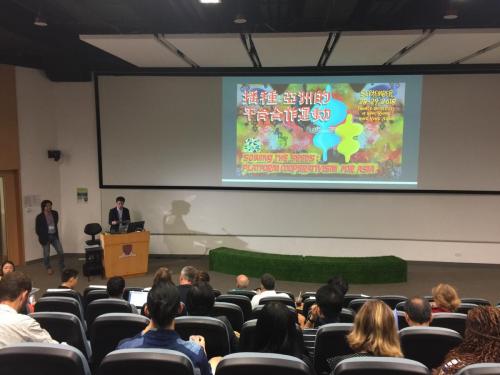
Jack Qiu Professor at the CUHK gives a welcome speech
A platform co-operative which runs as a business using a digital platform is jointly owned and democratically controlled by its members and operates on cooperative principles. The concept stems from the idea of overcoming the limitations of conventional platform owners like Uber, which is considered an iconic company in the “sharing economy”. For instance, Uber drivers are not the employees of Uber but work for the benefit of Uber and its shareholders. They are denied workers’ rights such as minimum wage, collective bargaining rights, etc. Let’s suppose Uber is a platform co-operative. Then, the drivers own the platform and share it, running the system for their own benefit in a democratic way. They don’t have to push themselves into “independent contracts”.
A platform co-operative is, definitely, a powerful business model with innovation and efficiency that can give benefits to the vast majority of workers; and not just a small minority with capital. But the concept itself doesn’t seem to be completely established as yet. Additionally, there are some tricky issues to be addressed. For example, if platform developers or technicians are to be members of a co-operative just like the platform users who have limited knowledge about the technical parts, can it be possible to run the cooperative in a democratic and balanced way? As the digital platform, by its nature, requires constant technical improvements, can a cooperative do this effectively with lots of stakeholders?
Although the platform co-operative business hasn’t attracted much attention in the co-operative movement; now is the time to take a close look and think about the implications it can have for conventional cooperatives. ICA is trying to involve young people in the cooperative movement and a platform cooperative might be the solution. It will be able to approach young people with the image of a value-oriented but not old- fashioned business model. After all, we already live in the digital economy and the world is changing every day.


