
Introduction
The 33rd ICA World Cooperative Congress in December 2021 with the theme, Deepening the Cooperative Identity, will celebrate and deepen the understanding of the Statement on the Cooperative Identity (SCI) and the profound social and economic impact of cooperatives worldwide.
The ICA-AP regional office is bringing the perspective of Asia-Pacific members into the conversation through online consultation, events, articles, and interviews. In March, as we celebrate International Women’s Day, the theme for this issue is “Women and Cooperative Identity”.
This year the UN Women announced ‘Women in leadership: achieving an equal future in a COVID-19 world’ as the theme of the International Women's Day (IWD21) (March 8). It “celebrates the tremendous efforts by women and girls around the world in shaping a more equal future and recovery from the COVID-19 pandemic.”
Women have always played an integral role in shaping communities and this was highlighted again in the world’s fight against the pandemic. Women have been at the forefront in fighting the hardships brought by the COVID-19 pandemic to businesses, homes, and communities. In cooperatives, women across all levels have shouldered equal responsibility in fighting the pandemic. They contributed to the response actions undertaken by their cooperatives (providing donations, providing supplies, carrying out relief work, etc) and in ensuring the survival of cooperative businesses. At the same time, women faced disproportionate burden triggered by domestic violence and unequal distribution of household care and responsibility.
In this issue, we hear the perspectives of Ms. Anahita Eslahpazir, CEO of the Rah-e-Roshd Cooperative Educational Complex (RCEC), Iran. We highlight the status of women cooperators in Myanmar through an opinion piece shared by the Central Cooperative Society Limited (CCS). We also bring you updates on how we and our members celebrated the IWD21.
In Conversation with Ms. Anahita Eslahpazir, CEO, RCEC
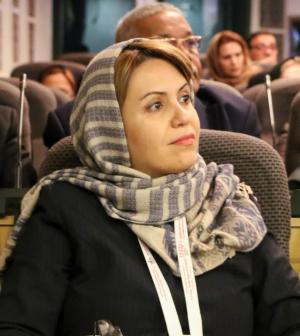
The education sector is considered to be women-friendly sector. How has your journey been as a women CEO of a cooperative educational institution?
Around 35 years ago, a few women came together to start a kindergarten for their children. It was in the middle of a war between Iran and Iraq and there were problems in the country. Education was important, but for children in the kindergarten age it was not a priority for the family. These women wanted to start a kindergarten and that is how Rah-e-Roshd was set up. Slowly, it created a good reputation, and many families came forward to admit their children. After five years, the parents requested to convert it into a school as they liked the culture. At that point, we did not have enough funds and that is when we thought that becoming cooperative is a solution. The idea was that this way, we could get members from the families of the students and the teachers. The subscription amount could be used to build the school and that happened! We built the middle school and the high school as well. At first, it was only for girls, after 10 years, we built a primary, middle, and high school for boys too.
I came to Rah-e-Roshd about 20 years ago and started my journey as a Mathematics teacher. Back then, I neither had any knowledge of cooperatives nor the experience of working with a cooperative school. As I joined Rah-e-Roshd, I found it to be a little different. After a few months of working, I got to know that the teachers are the members and shareholders of this cooperative, which was quite interesting to me! After a while, I too joined as a member of the cooperative. Now, we have around 2,000 students enrolled and 500 colleagues, out of which, 250 are members. Most of our members are also the employees of the cooperative and most of them are women!
When a woman is smart and begins a business, nobody cares. But when she becomes successful, has good cash flow and reputation, others too become interested in joining. They think as a woman, you cannot manage everything alone and on the pretext of helping, they want to handle everything. We also faced such situations, but we stood up to save our positions. In all these years, the board members and the CEOs of the cooperative have been women. However, we also had many supportive men in our cooperative who believed in us. We had many ups and downs but eventually, they agreed that women can manage and handle everything about education and schools better than men.
After 10 years of teaching at the high school and performing other roles, I became the CEO in 2010. When you have a change in position, you have to face many challenges irrespective of being a man or a woman; but for women, it is more challenging. I faced many challenges too. When I first accepted to the CEO position, I was expecting my first child after a wait of 15 years. So, everything came at the same time for me. There were a few other members who wanted to take the CEO position and they had a lot of shares in the cooperative, so they pulled out the money from the cooperative and that was the biggest challenge for me. It was difficult for me to handle that situation with a high-risk pregnancy. Some men who were experts and managers in other companies suggested making the school smaller and downsizing the employees. I was not sure of it and through a discussion with my women colleagues, we had a better solution. They suggested that all employees could take a 50% cut in their salaries and the rest be given as shares to the cooperative. This way we did not only pass the situation but a lot of other teachers joined the cooperative too! The money that we had lost, we could get it back. It was not very easy, but it happened and that is what is most important.
We note that 80% of Rah-e-Roshd’s shareholders, mostly its employees, are women. This is exemplary! Do you think having more women in leadership contributes differently to the growth of any organisation?
I think that depends on how society looks at it and the mission of the cooperative. Many women think that we should have extra benefits, but women or men, it does not matter for a leader, gender is not the main thing.
What is more important for a leader is that the cooperative should create more jobs, it should be more transparent and democratic. Both men and women leaders should have this point of view. Generally, I think women are more responsible for these values.
How can a cooperative educational institution help reduce gender inequality and empower women?
I cannot say how the education sector can empower women, but I can tell you that cooperatives can. In many societies, women generally do not have the interest or the money to start a business. Cooperatives make it possible for women to get together and put a small amount of money to start a business and support each other.
The education sector is women-friendly because children are more attached to mothers, so they find it easy to adjust with women teachers. Therefore, this sector empowers more women.
In our school and everything that we teach, there is nothing that points out the difference between a man and a woman. So, when you do not mention that difference, that is enough for not creating a point of view on gender difference. But as a woman running a boys’ school, I saw that at first some of them were very surprised seeing a woman as the head of the organisation, who has authority and is respected by everyone. But they saw a new figure of management which is good for the boys to note. This is the only difference from other schools.
Working together, sharing knowledge, respecting each other, and teamwork create the meaning of equality and gender balance for all the people and students.
Why is gender balance and having a more diverse workforce in cooperatives important, especially in the senior management/ leadership?
I think the world and nature are better with a balance. So, having a gender balance will help. If we say that women should do everything, I do not think that the world can work like this anymore. The balance is beneficial to all.
In your opinion as a woman coop leader, how can coops make sure that the governance practices are inclusive and welcoming to all?
We cannot be sure but we can make them inclusive and welcoming. Women should be patient and work for it, then we can build something for ourselves. If we just say that everything should be the way we want, nowhere in the world is this possible. We as women must build it for ourselves.
Only cooperatives making efforts to be more inclusive is not the way, women must want to be in governance positions too. They should be educated during school, university, and in their families that they believe they can do it. I think the kind of values that we get through our upbringing and education play an important role in moulding women as confident beings and think that they can be leaders too.
Being a women leader what were some of the challenges that you faced during COVID-19 and what was your strategy to overcome those?
I think the whole world faced challenges due to the pandemic.
At Rah-e-Roshd, we believed in doing our best. It did not matter that how many days the pandemic will take or how hard we will have to work, nothing mattered but the students. It came from being a woman, a mother, being caring towards children. This was a major difference between us and other schools in that we thought we should take care of students in any possible way. Sometimes we went to their houses virtually, sometimes we sent nurses or teachers to take care of children at their homes. We kind of become part of their families and I think if we were not women, they would not have trusted us this much and we would not have cared that much.
We had a challenging situation with the salaries of employees. We tried to make sure that they got the support and their salaries from the government. We were one of the first organisations to sense that the pandemic will last long. So, we went ahead to support our employees and somehow, could do this. We did not just say that we don’t need you anymore, but we supported each other in many ways. We even supported society as we made some clothes and disinfectants for the hospitals. Many women joined us in the response work.
Most of the times, Rah-e-Roshd has been the mother of the others, we have always been helping society and the people.
Women have been at the forefront in fighting COVID-19, going forward how do you foresee achieving a better future for your coop?
I think with the pandemic, it is very hard for the world to come back to normal. But for our cooperative, it is getting better. We did a good job this time; we now have students from other schools who want to join our school. Things are better because we did not think about the money and time that we spent, we only concentrated on the students and their education. Parents saw us, everything was at their homes, they could see the classrooms without walls and knew what was happening. So, I think we will have a better future.
We have a virtual learning management system and we created groups of 10 to 15 students as one virtual classroom. All cameras remain on throughout the classes, we even have exercise and sports classes virtually. I can say that the discipline is more than a physical school setting.
In her concluding remarks, Ms. Anahita said “In my opinion, when we divide the world as women and men or people with certain likes or dislikes, we are dividing everything and this way, the community cannot make good relationships with each other. The world is a combination of all things, there should be a good balance. The purpose should be ‘being with each other and not ‘being divided’.”


